Deckbuilding Novice
Beginner's Guide to Magic: The Gathering - Card Explained
Understanding the Structure of a Planeswalker and Creature Card Using Liliana of the Veil Magic: The Gathering cards might seem complex at first glance, but each part of the card serves a specific function. In...
Deckbuilding Novice Page 1 of 2
In this article 11 sections
Understanding the Structure of a Planeswalker and Creature Card Using Liliana of the Veil
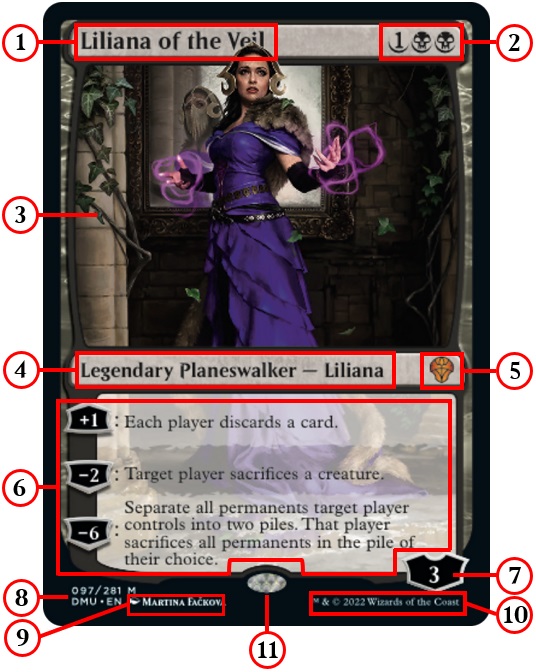
Magic: The Gathering cards might seem complex at first glance, but each part of the card serves a specific function. In this guide, we will walk through each key component of a Magic card using "Liliana of the Veil" as our reference point. We will also explain how each of these components may differ if the card were a creature, such as "Serra Angel."
1. Card Name
The top-left part of every Magic card contains its name, in this case: Liliana of the Veil. This is the official name of the card, which is essential for gameplay and deck construction. The name determines uniqueness; for example, you can only have one legendary permanent of the same name on the battlefield unless a rule or ability allows otherwise. This is particularly important with legendary planeswalkers and legendary creatures. With creatures, the name follows the same structure and also plays a key role in synergy with cards that reference specific names or types.
2. Mana Cost
To the top-right of the card is the mana cost, displayed as a combination of symbols. For Liliana, the cost is 1BB, which means one generic mana and two black mana are required to cast her. This dictates not only how early you can play the card in a game, but also what colors your deck must produce.
Understanding the different types of mana is crucial:
White (W): Represented by a sun symbol and usually associated with order, protection, and healing.
Blue (U): Represented by a water drop, symbolizing knowledge, manipulation, and illusion.
Black (B): Represented by a skull, standing for death, sacrifice, and ambition.
Red (R): Represented by a flame, indicating chaos, speed, and destruction.
Green (G): Represented by a tree, focused on growth, nature, and strength.
Colorless (◇): Used for certain spells and abilities, especially in artifact-heavy or Eldrazi-themed decks.
In addition, there are special mana symbols:
Hybrid Mana (e.g., {W/U}): Can be paid with either color shown.
Phyrexian Mana (e.g., {B/P}): Can be paid with either the specified mana or 2 life.
Snow Mana (❄): Requires mana from a snow permanent, like a Snow-Covered Land.
Creature cards may use any of these mana types, depending on the card's design. Some creatures might cost only generic mana, while others require very specific combinations, especially in multicolor decks. Evaluating a card’s mana cost helps determine its playability and how well it fits within your deck’s color identity and resource curve.
Was this article useful?
Feedback helps improve future ManaForge guides.
Keep exploring