Commander Intermediate
Choosing the Commander That Truly Fits You
Why the right Commander is about more than archetypes, power, or popularity Commander is often called Magic’s most personal format, and for good reason. No other format asks you to make so many decisions about...
Commander Intermediate Page 3 of 6
In this article 14 sections
How much forgiveness do you want from your deck?
Some commanders are brutally honest. Mis-sequence one turn, keep a risky hand, lose the wrong support piece, or expose your commander too early, and the whole plan can stumble hard. For some players, that is part of the thrill. They enjoy tight margins and the sense that every decision matters. For others, that same experience becomes frustrating very quickly.
This is one of the least glamorous but most important questions in Commander: how much resilience do you want your deck to have when things go wrong? Some players enjoy the tension of high-risk, high-reward gameplay. Others want room to recover. They want to survive removal, board wipes, awkward draws, or imperfect sequencing without feeling like their entire deck has stopped functioning.
That preference shapes commander fit more than people often admit. A low-margin commander may be exciting for a player who enjoys pressure and precision. That same commander may be miserable for someone who wants their deck to support them through disruption instead of punishing every stumble. Commander is not only about what your deck does when everything goes right. It is also about how it feels when things go badly.
Commander dependency is a lifestyle choice
Some decks are built around their commander so deeply that the commander effectively is the deck. Remove it twice, tax it hard, or stop it from sticking, and suddenly the list feels hollow. These kinds of commanders can create powerful identity and extremely memorable games, but they also make your deck more fragile and your frustration more concentrated.
Other commanders matter a lot without being absolutely required. They sharpen the deck, accelerate it, stabilize it, or create extra value, but the ninety-nine can still function if the commander never really gets going. Those decks often feel smoother over time because they still get to play real Magic under pressure instead of waiting for one key card to resolve.
That is why commander dependency is not just a build choice. It is a quality-of-life choice. A lot of players say they want a commander that “really feels like the commander,” and that instinct makes sense. The problem is that it hides a crucial follow-up question: do you want your commander to be the center of the deck, or do you just want your commander to matter?
Those are two very different philosophies. One gives you identity and intensity. The other gives you flexibility and resilience. Neither is better in the abstract. But one of them may fit your temperament far better than the other.
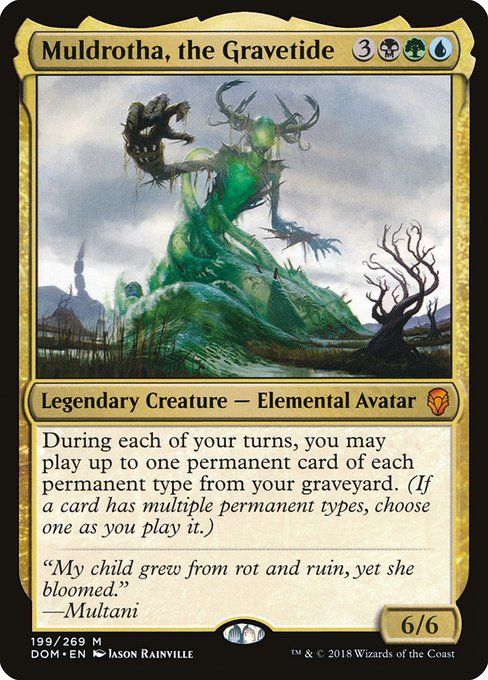
Example Commander: Muldrotha, the Gravetide
Muldrotha is a strong example of a commander that appeals to players who love resilience, recursion, and the feeling that resources never truly disappear. If you enjoy recovering from interaction, replaying your best tools, and turning attrition into inevitability, Muldrotha can feel incredible. But if you dislike graveyard management, layered sequencing, and longer value turns, a commander like this can become mentally heavier than it first appears.
Was this article useful?
Feedback helps improve future ManaForge guides.
Keep exploring