
Source transparency: This Digest item is based primarily on reporting from MTG Rocks. TMF summarizes and interprets the news; original reporting remains credited and linked.
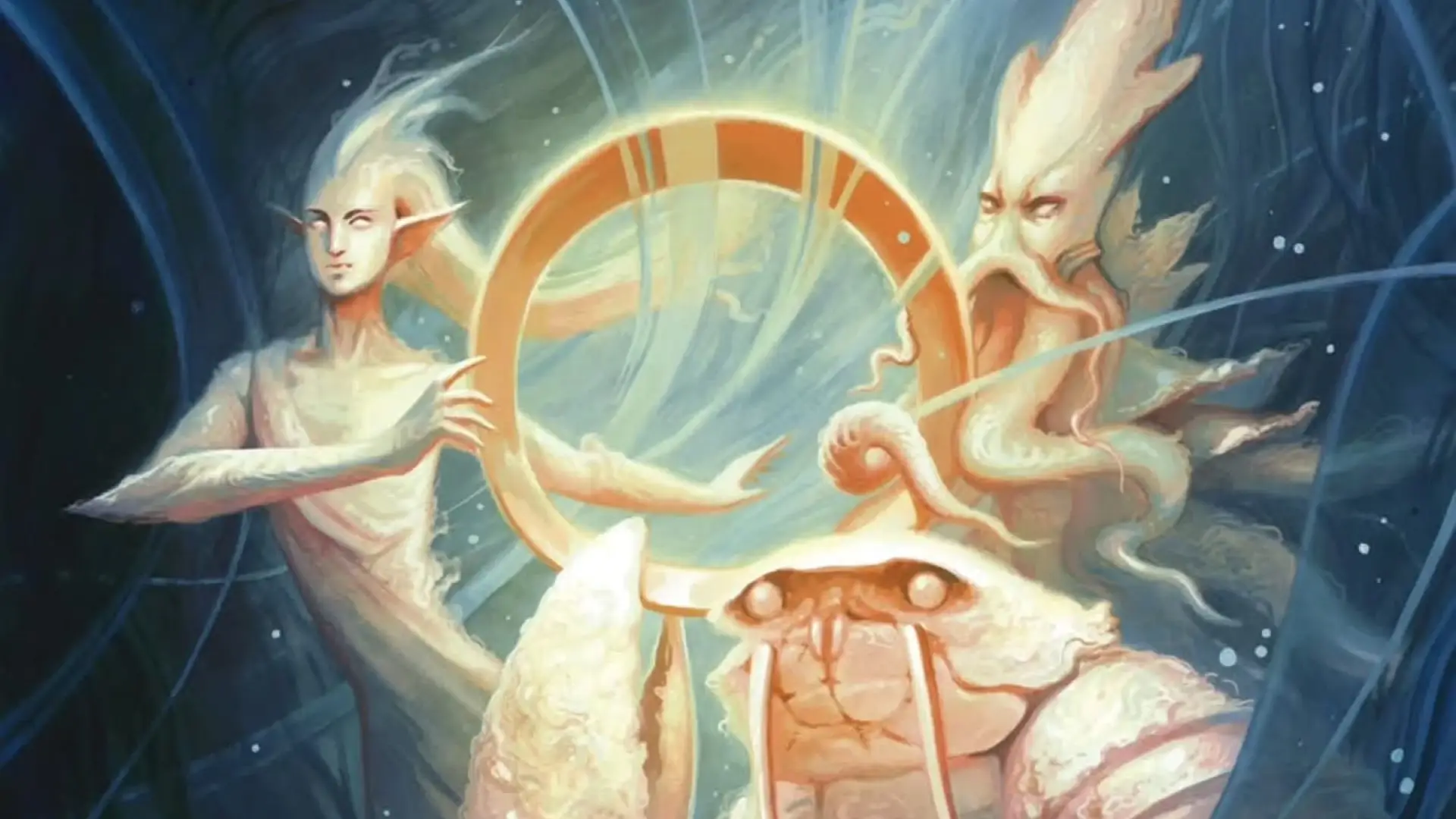
Ring of Unity gives Commander decks a new way to use the artifacts they already have. The Nauctis mythic costs seven mana and lets each artifact you control tap for two colorless mana. The payoff depends on what you have in play when it resolves: a board full of untapped tokens can generate enough mana for a second play immediately, while an empty board leaves you with a much smaller return.
Clues illustrate why the card is interesting. A Clue can tap for two colorless, then spend those two mana on its own draw ability. The draw ability requires sacrificing the Clue but does not require it to be untapped. A Lonis, Cryptozoologist or Teysa, Opulent Oligarch deck that has accumulated Clues can therefore reload its hand without spending mana from lands. Treasure decks get a different choice: tap Treasures for colorless and keep them for later, or sacrifice them for colored mana as usual. Passive artifacts and Equipment give you additional mana sources without giving up their usual effects.
Staff of Dominance offers a separate payoff. With Ring out, tap the Staff for two mana and spend one to untap it. Each cycle leaves one extra colorless mana. The Staff can then use that mana to draw cards or gain life, and a payoff such as Walking Ballista can turn the surplus into a win. Pili-Pala can instead produce colored mana by tapping for two and spending those two mana on its own untap ability. As an artifact creature, Pili-Pala needs haste or must have been under your control since the start of your turn for that line.
Seven mana is the main constraint. Decks that routinely make spare artifacts and have a way to spend the extra mana are better candidates for testing than lists that would add weak pieces just to support Ring. Artifact recursion can help the card enter ahead of curve, but the best reason to try it is a productive turn even without the Staff. These are interactions from the card preview; the source does not establish tournament performance or broad adoption.
Original source: MTG Nauctis’s Ring of Unity Turns Every Artifact Into a Sol Ring ↗MTG Rocks