
Source transparency: This Digest item is based primarily on reporting from Magic.gg. TMF summarizes and interprets the news; original reporting remains credited and linked.
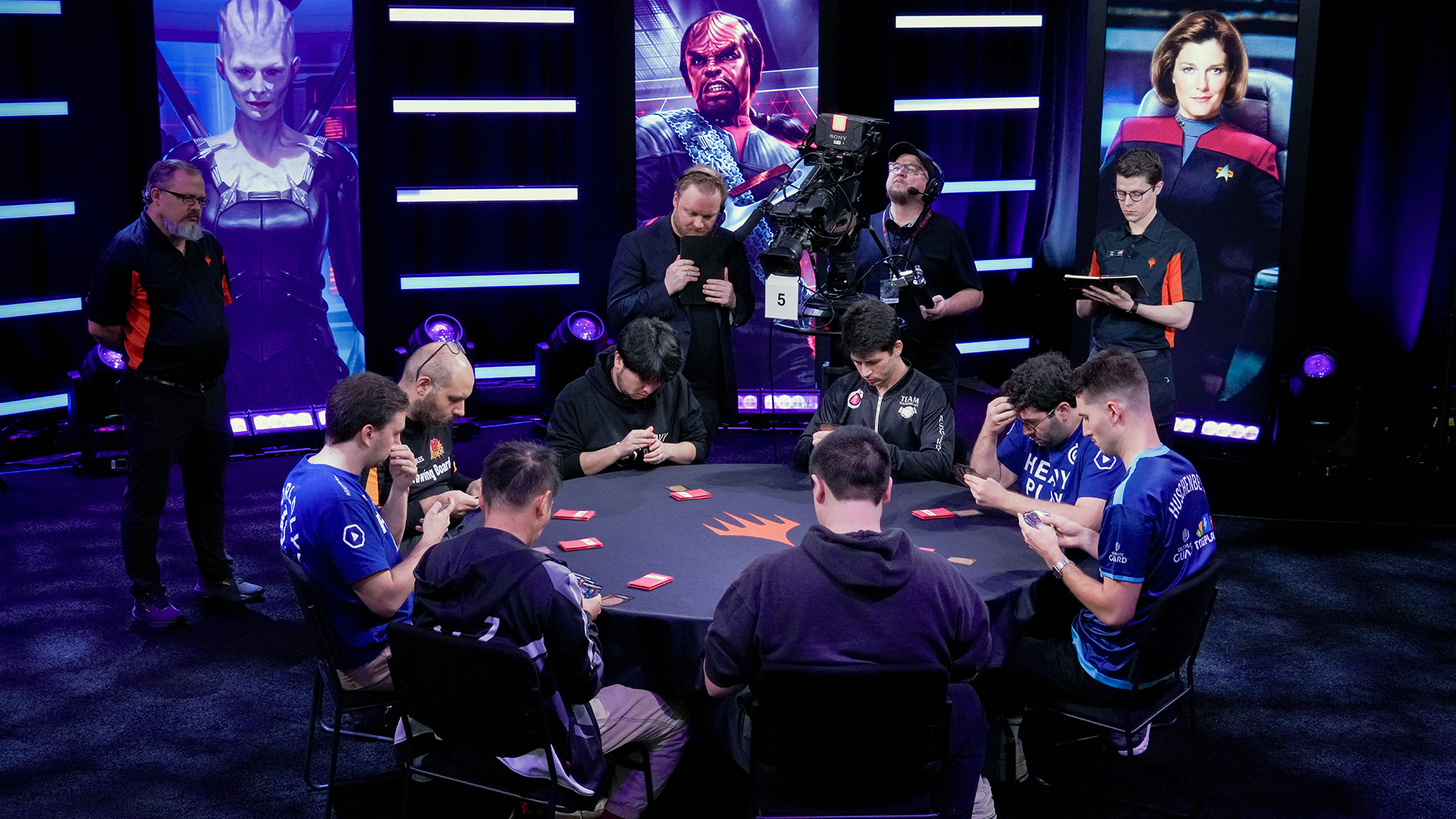
The two Star Trek drafts at Magic World Championship 32 gave players an early look at the format under tournament pressure. Magic.gg reports that five Team Handshake Moxfield players went 3–0 in their pods with aggressive decks. Zevin Faust did it with mono-white, while Petr Sochůrek, the only player to go 6–0 across both drafts, drafted red-black in his second pod and had only one rare, the surveil land Quark’s Bar. The useful signal is that these decks can function on common cards, without needing a rare payoff.
If the early picks point toward aggression, prioritize a low curve and cards that contribute to the board right away. Handshake Limited lead Alex Rohan said the team favored white aggro first and red aggro next. Sochůrek argued that red-black had enough depth at common to remain playable even with competition for the colors. That is a reason to value the lane when the commons come around, not a reason to force it blindly. Pay attention to whether the table is giving you enough playable cards to keep the deck moving.
The alternative still has a place. Marcelo Cavalcante won a draft pod with a three-color deck and seven nonbasic lands. He cited cards including Cloak and Phaser, Interstellar Effigy, and Sylvia Tilly, Joy of Discovery. Eduardo Sajgalik’s team found in testing that the slower green decks struggled when several players at the same table wanted the fixing and payoffs. A good multicolor deck needs both time to set up and access to the mana to make its late game matter.
This is a release-week sample from one championship, not a complete format ranking. Its practical lesson is to treat cheap cards that affect the board as a dependable starting point and take the slower route when the seat offers enough fixing and reasons to use it.
Original source: Magic World Championship 32 Day Two Highlights ↗Magic.gg